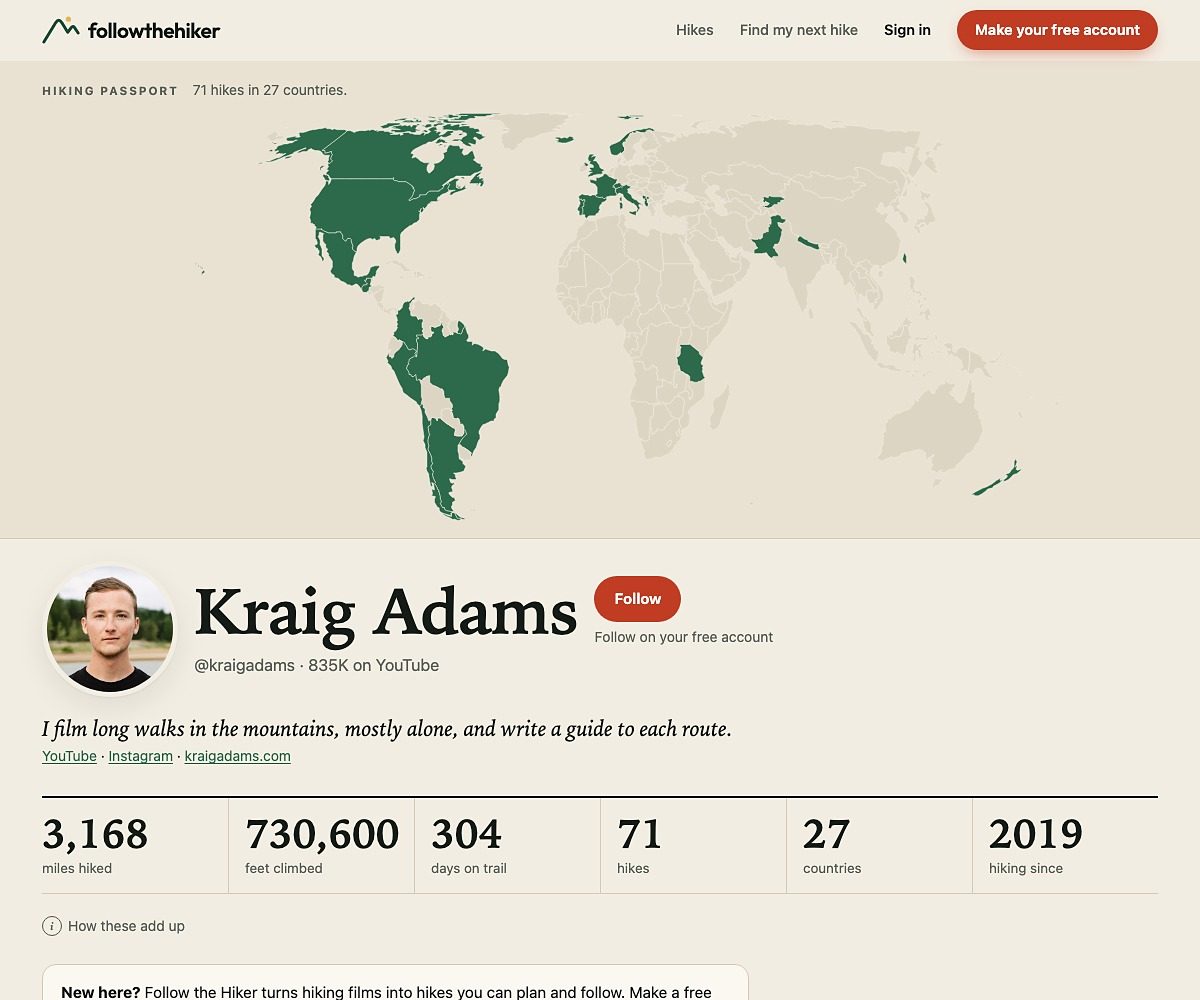
Building Follow the Hiker: from an idea to 116 live hikes in 14 days
I am not a programmer, but I had ten years of hiking films, GPS tracks and guides. Here is how I built Follow the Hiker on Cloudflare with Claude Code in two weeks, why I put it in a feature freeze, the live numbers, and the goals I am holding myself to.
I have made about 250 hiking films on YouTube over the last ten years, and for most of them I wrote a guide: how to get there, where to sleep, what it cost, what to carry. The films make people want to go. The question I get more than any other is how to actually do the hike.
Until this month, that answer was scattered across YouTube descriptions, pinned comments, and static pages on my own site. On November 4 I decided to build one dedicated home for all of it, structured around the people who actually walked and filmed the trail.
Why I built it
Trail apps like AllTrails and Komoot are built around anonymous reviews of a trail. That is not how most people in my audience choose a trip. They pick a hike because a creator they trust walked it, filmed it, and showed what it really looks like.
The idea was simple: give every hike a clean, factual page, and let people follow a hiker's profile to plan and walk the same routes. The film is the hook; the guide and GPS track are how you do it.
From idea to live site in two weeks
I started right after shipping the first piece of ShipGames, a small site for browser games. Building something similar for hiking made immediate sense because I already had an audience and ten years of structured trail material to populate it on day one.
Here is how the 14-day sprint played out:
- November 4 (morning): architecture and scope. I mapped out the product as a ladder: lots of people hike, fewer film it, fewer still earn from it. The site needed to be useful on every rung. I reviewed two rounds of feature proposals with Claude and locked the build plan.
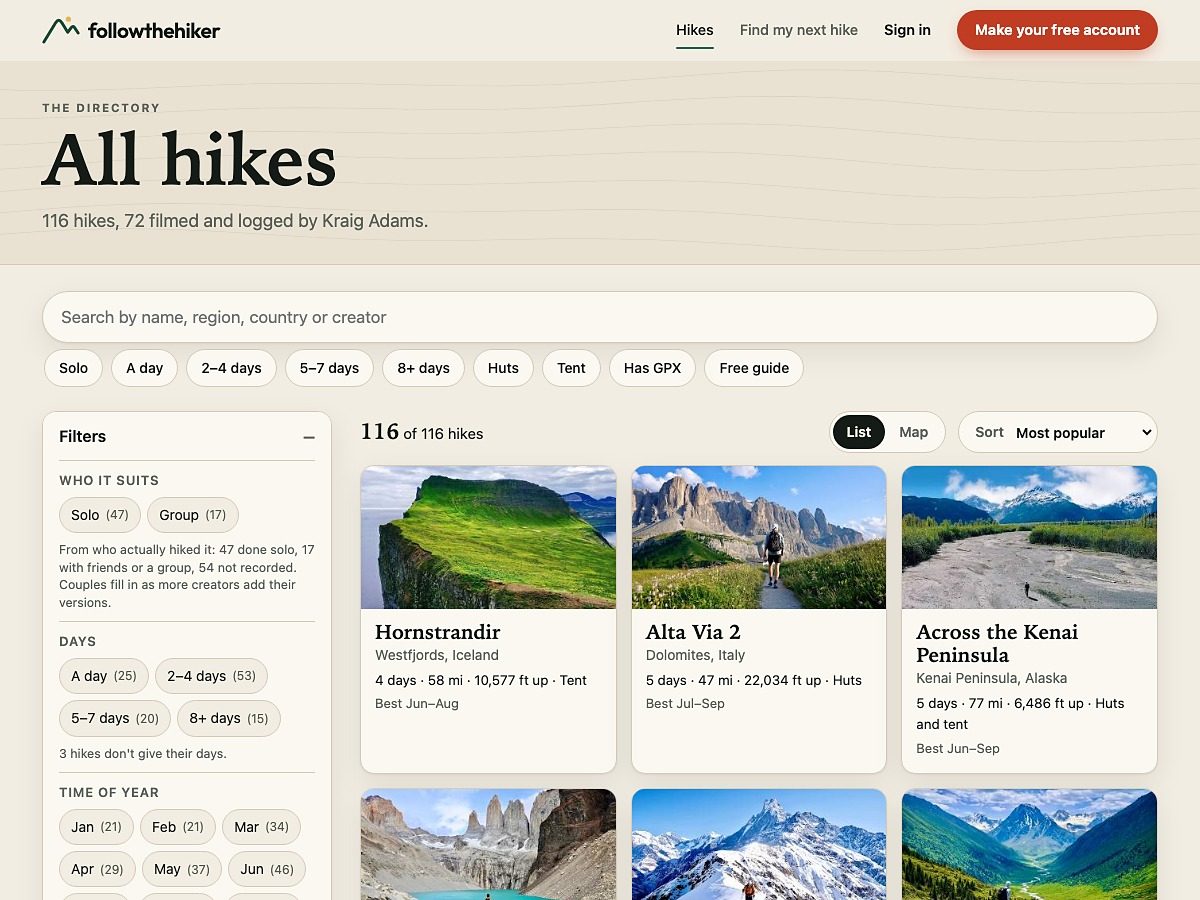
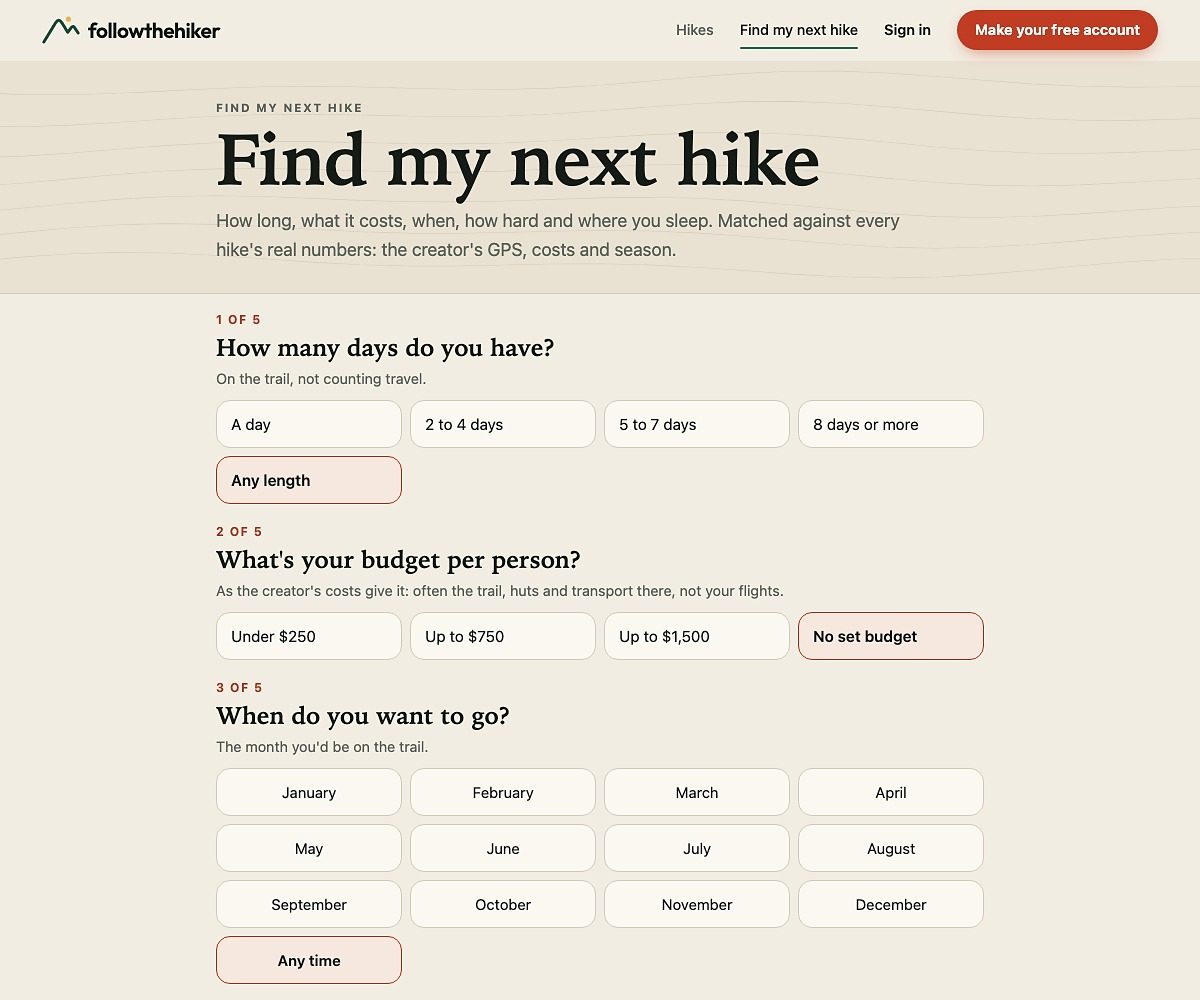
- November 4 (rest of the day): first five checkpoints. I bought the domain and shipped the first five milestones sequentially, each tested before moving on: my profile and 72 hikes, the filterable directory, a five-question hike finder, trip planning, and user accounts with GPX uploads (including automatic start/end privacy masking).
- November 5: gear and creator pages. Added ranked gear lists per version and built private draft pages for other hiking filmmakers so they can review and claim their own profile rather than having anything published without permission.
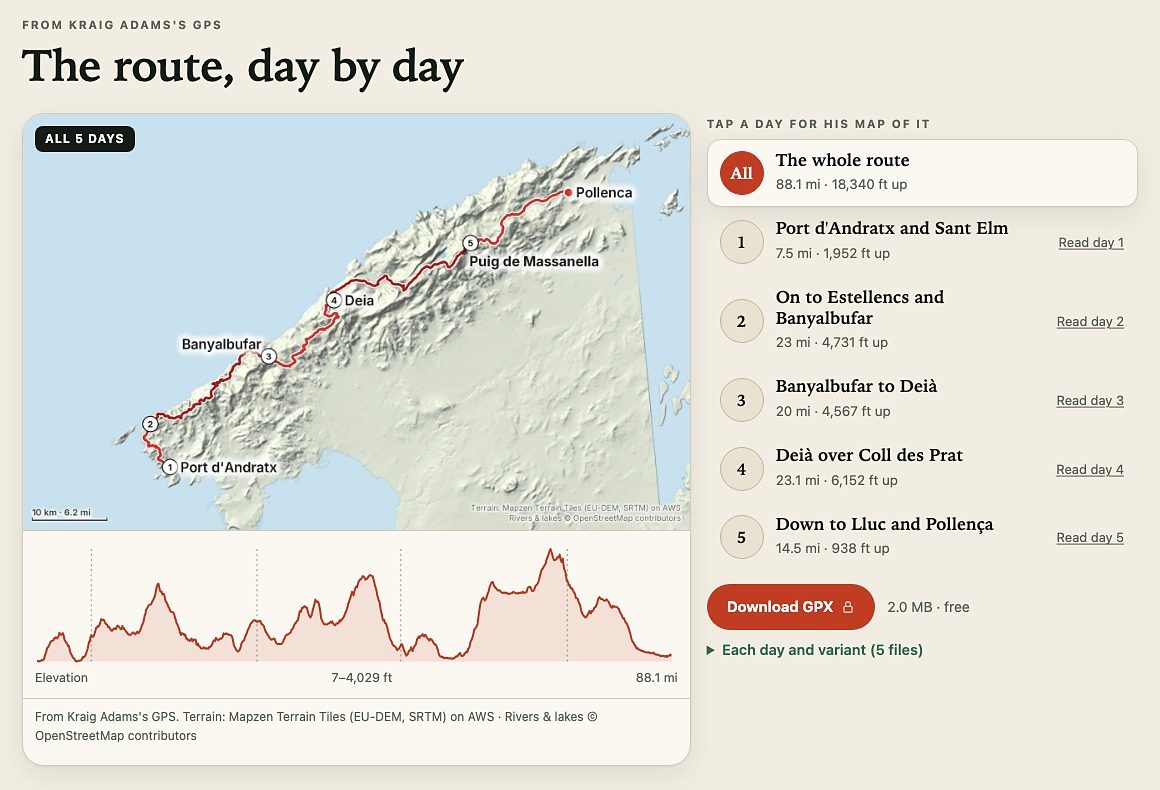
- November 7 and 8: maps, facts and indexing. Added real terrain maps for every route, filled missing facts from official sources, sourced openly licensed photos for hikes I have not done, tuned speed and link previews, and opened the site to search engines.
- November 9 to 17: polish and fact-checking. Added likes and comments, ran a fact-check across every guide against its sources, expanded the world catalog from a researched list of 2,027 popular routes, simplified the first-visit experience, and redesigned the home page and logo.
Two rules kept the quality bar intact throughout the sprint:
- Never invent. Every fact on a page comes from my guide, my GPS track, my film, or an official source. If none of them states a number, the page leaves it blank rather than guessing.
- Trust over volume. If a reader gets the sense that a guide is generic AI filler, the site is dead. Every guide has to be accurate, updated, and more useful than asking an LLM yourself.
Where it stands and why I froze features
On November 17 I put Follow the Hiker into a feature freeze: no new features and no new hikes until traffic and usage move. It is easy to keep shipping code with AI and mistake building for progress. The bottleneck now is distribution, not software.
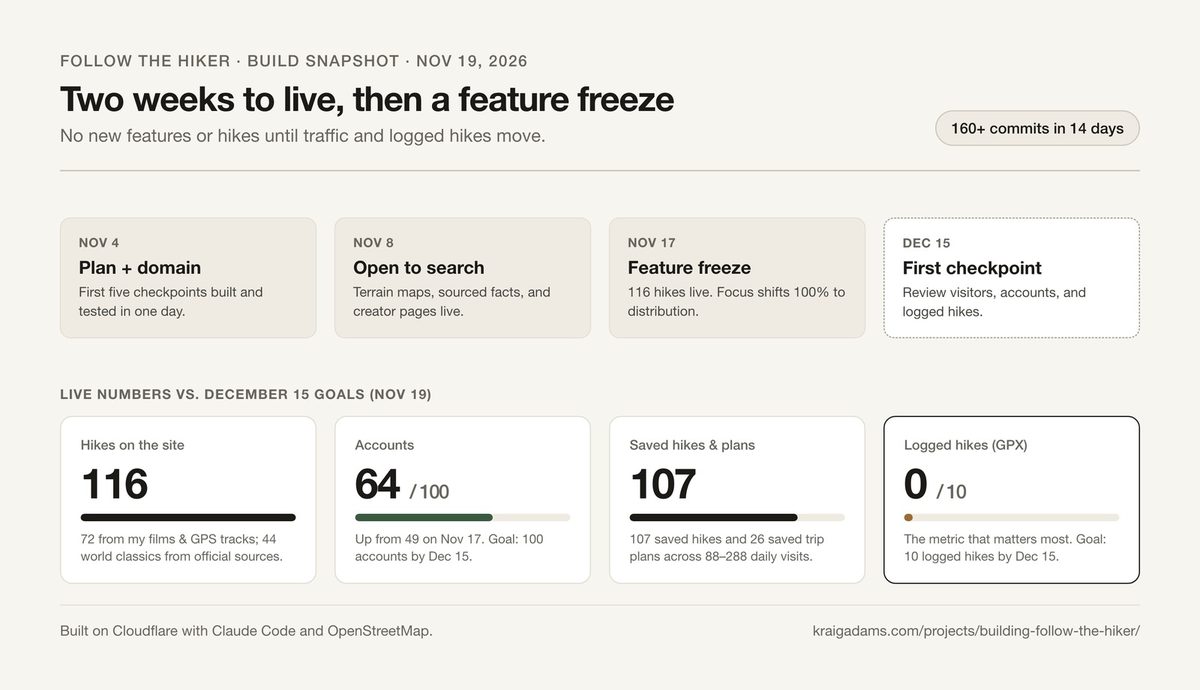
As of November 19:
- 116 hikes live (72 mine, 44 world classics from official sources)
- 88 to 288 daily visitors, mostly direct visits from my videos and site redirects
- 64 accounts (up from 49 two days earlier)
- 107 saved hikes and 26 saved trip plans
- 0 logged hikes uploaded by other users
That last number is the only one that really tells me whether the product has pull. Saving a hike is passive; uploading a GPX track from your watch means someone actually used the site.
Public goals
I am writing these down so anyone can check back:
- By December 15, 2026: 10 hikes logged by people who are not me.
- By December 15, 2026: 100 accounts (currently 64).
- Early 2027: 5 other hiking creators live on the site with their own hikes.
- Spring 2027: Another creator makes their first sale on the site.
On December 15 I will review visitors, accounts and logged hikes, decide what to build next, and update this page with the result.
The stack (for non-programmers)
You do not need to be a software engineer to ship a database-backed web app anymore. Here is the entire stack:
- Cloudflare: One small program runs the site on Cloudflare's network, with a database for the hikes, accounts and plans, and file storage for uploaded GPS tracks. Hosting costs are minimal at this scale, and everything lives in my own account.
- Claude Code: I describe what I want in plain English; Claude writes the code, runs the test suite, and deploys after I review each step.
- Owned material first: Because my guides and GPS tracks already existed, the site launched with real depth instead of empty templates. External routes use OpenStreetMap and openly licensed photos from Wikimedia Commons, all credited.
- Passwordless auth: Sign-in runs on passkeys, Google or Apple, so there are no passwords to store.
If you have a catalog of anything (trips, recipes, games, gear, workshops), the same architecture works: one canonical page per item, your version of it, and room for other people's versions beside yours. The hard part is no longer writing the code. It is having original material and deciding what belongs on the page.
Where I want it to go
If the December numbers justify continuing, the roadmap has four stages:
- Founding creators: Build private draft profiles for other hiking filmmakers from their public films so they can review and publish them for free.
- Creator-sold guides: My guides stay free, while other creators can sell theirs on the platform with a small revenue share.
- Trip bookings and referrals: Big hiking films inspire people to spend real money on travel, huts and guided tours. Thirteen hike pages already include a guided-tour option; with more traffic, the site can partner directly with local operators and huts.
- Reach: Multi-language pages, a simple mobile recording flow, and an MCP connector (already built) so AI assistants can answer hike questions directly from the site's sourced facts.
None of that happens until people actually log hikes. For now, the site is live at followthehiker.com and my full catalog is on my profile.