Making and launching a 7-hour hiking film with AI
The behind the scenes of my new 7-hour ambient film: the three-hour montage AI built first, how I steered it into twelve whole films, the music and its thirty copyright claims, the thumbnail, and the launch.
Watch it: 7 Hours of Ambient Hiking Footage
Why another long film
My biggest videos aren't my trip films. They're long compilations of hiking footage. The four-hour one has more than 4.3 million views, and two three-hour ones have 3.4 million and 1.7 million.
Claude went through their numbers first. About three in four views come from a TV, and most come from YouTube suggesting them. People put them on and let them run: on a TV, the average view of the four-hour film is about an hour and a half. The ones that worked kept about two thirds of their viewers past the first two minutes. The ones that didn't had lost half.
The one that flopped taught the most. My seven-hour compilation from 2021 repeated the four-hour film for its first 78 minutes, and got a fraction of the views. So the first rule this time was fresh footage only: two years of trips that had never been in a compilation.
The first plan was wrong about music
Claude's research turned into a plan: three hours, about thirteen chapters of twelve to fifteen minutes each, one trip per chapter, ordered like one long day from dawn to night, and natural sound only. No music.
That last part was wrong. My best compilations do have music: calm music all the way through, with the trail sound underneath. The research had read the "no music" idea into them. I knew, because I made them. It was the first of a lot of corrections.
Version one: a three-hour montage
I had Gemini watch the films and log every shot: what's in it, the time of day, how big I am in the frame, whether anyone is talking or music is playing. The Kyrgyzstan film alone came to 842 moments.
From those logs, Claude picked shots and wrote the timeline as a Final Cut file: 262 short clips from twelve trips. It never opened Final Cut itself. It wrote the project file directly, so I could import it and watch.
The music, round one
For the first version, Claude took out my films' own music and put 55 new tracks from Artlist under the trail sound.
I didn't want that. My films already have music I picked and mixed, and it fits them. So on October 13 the rule became: keep each film's own soundtrack, music and camera sound as I mixed them, and add new music only where a film has none.
Claude found every stretch of twenty seconds or more with no music: 24 gaps, 54 minutes in all. For each gap it searched Musicbed for songs like the ones already in my films and made a shortlist. On October 19 I said go, and it licensed 28 tracks on my Musicbed subscription, placed them, and faded each one in under the film's own music as that ended.
Then the levels. My films sit at very different loudness: Cerro Huemul is about -21 LUFS, Lofoten about -42, quiet enough that you'd reach for the remote. Claude brought every chapter to the same loudness, turning some up by more than 20 dB, and gave every footstep, gust and trekking pole that would clip a short dip of its own. Thousands of tiny volume keyframes, all written into the file.
Opening it in Final Cut
On October 22 I opened the timeline in Final Cut and listened. It wasn't ready.
- Two songs at once. Final Cut ignored a setting in the file, so the picture clips played their own sound on top of the sound lanes. Every film's sound was doubled, and in the Dolomites, two songs played together.
- Someone in boots, indoors, on a mountain. The Dolomites chapter used trail sound pulled out of the film's soundtrack, and it had picked up the wrong things. In my words: "you added movement sounds ... someone's shuffling around with boots and a coat inside."
- The fades were gone. Final Cut threw away every volume keyframe on import, because of one attribute it doesn't accept for audio.
All three were fixed the same day. The Dolomites film was the hard one: its songs already had ten copyright claims on them, and the music and camera sound were mixed together, so they couldn't be split cleanly. From that came my three sound rules for every compilation:
- A film with music and trail sound plays as it is.
- A film whose music has to go is muted completely and gets new songs.
- A film with only trail sound gets calm music on top.
Twelve whole films
The bigger change came the same afternoon. I didn't want a montage of short clips. I wanted "the full films with the sponsorship or talking cut out of it ... Start to finish. Each chapter is just a new location, a new video."
So Claude started again, overnight. Whisper listened to every soundtrack, and with Gemini's logs Claude found every stretch of talking. My rule: cut any conversation over about fifteen seconds, keep a word or two. That came to fourteen cuts, including a sponsor read in Norway and a long talk about a big, stupid steak in Patagonia. Each cut got a short crossfade so the film's own music never jumps.
The next morning there were eleven whole films, 6 hours 51 minutes, starting with K2. I watched it and changed the start: "I just don't know if starting with K2 is the best idea ... we should start with our most popular videos ... the first couple of seconds and minutes is like the most important." So it opens in the Dolomites, on the first wide shot of Lago di Braies, then Kyrgyzstan, then K2.
Kyrgyzstan came in as a new twelfth film: the Ak-Suu traverse from my ambient edition of that trip, one continuous 38 minutes. And I took out the crossfades between films: "Let's do fade to black between chapters, like different videos, different trips." Now each film fades out, there's a second of black and silence, and the next one fades in.
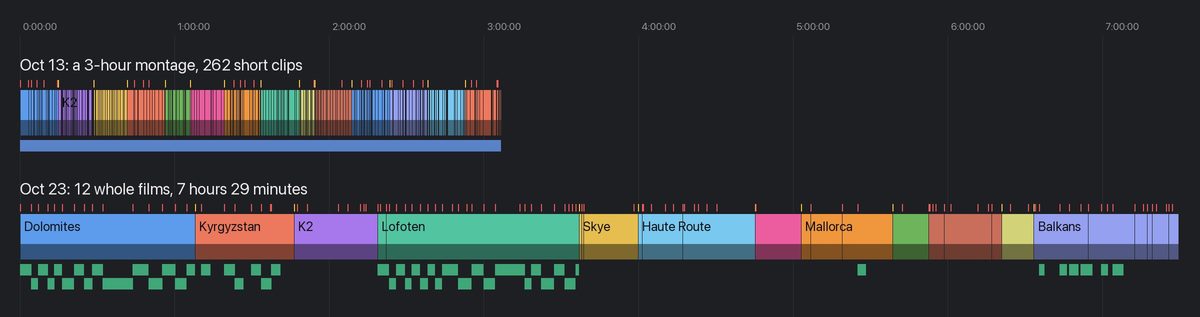
Three hours became seven and a half. I'd planned three. Twelve whole trips are what they are, and the title followed the length.
The Dolomites hour plays muted, with fifteen Musicbed tracks back to back. Lofoten keeps its camera sound with music on top all the way through. In the end the film has 47 Musicbed clips from 29 licensed songs, so some play twice, never back to back. Every chapter sits at -17 LUFS.
Claude rendered the 4K master straight from the timeline, frame for frame: 808,189 frames, 81.6 GB, the sound measured again on the finished file.
Thirty claims
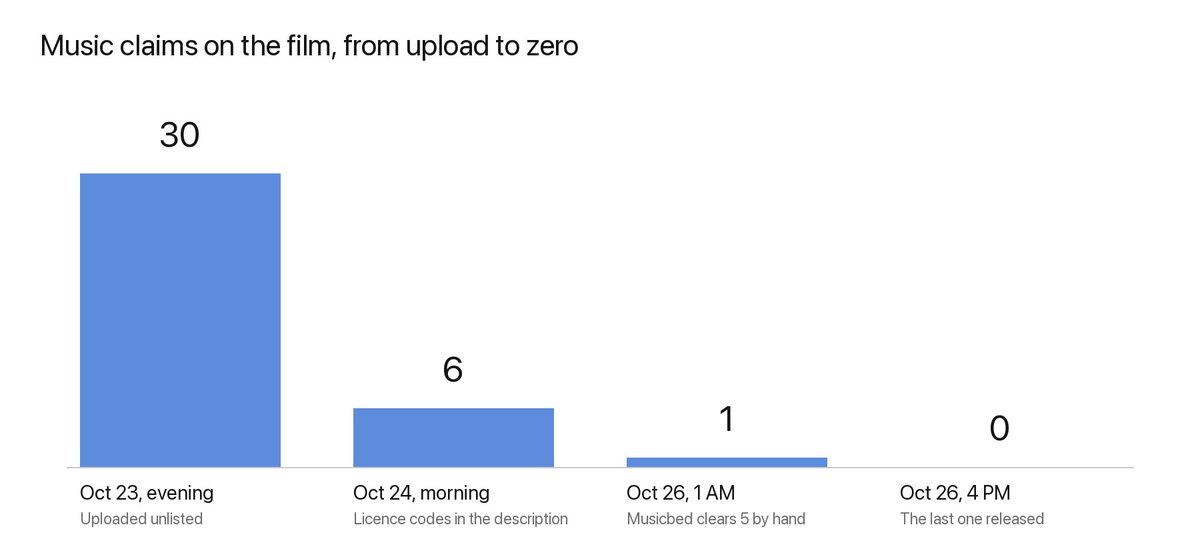
I uploaded it unlisted on October 23. That evening YouTube's Content ID found thirty music claims.
None were strikes, but the video couldn't earn anything until they cleared. Most were on the Musicbed songs: licensed, but their licence codes weren't in the description yet. The rest were songs inside my own films. I'd licensed those years ago for the original videos, but a licence covers one video, not the footage. Every older film I'd put in this one carried its songs with it.
So Claude licensed those songs again for this film, nine of them, on the same subscription at no extra cost, and put all 38 licence codes in the description. Within hours, Musicbed's system matched the codes and sent a stream of "your video has been cleared" emails. By the next morning six claims were left.
For those six, Claude sent Musicbed's claim form for each one. Their team cleared five over the weekend. The last one was registered through a different company, so I emailed Musicbed's support with the details, and it was released on the afternoon of October 26. No claims left. The film went public the next morning.
The thumbnail
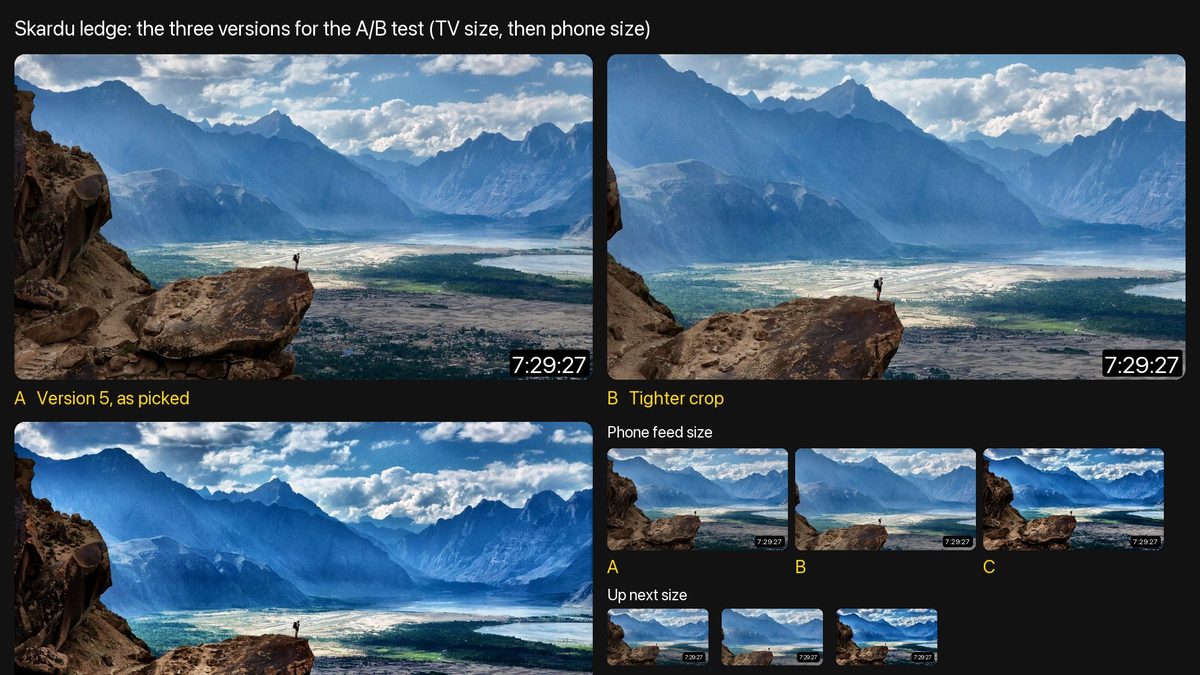
My best thumbnails are one wide photo, no text, with me small in the frame. Claude's first picks were frames from the films: the Dolomites at dawn, K2, a camp in Kyrgyzstan, Navarino.
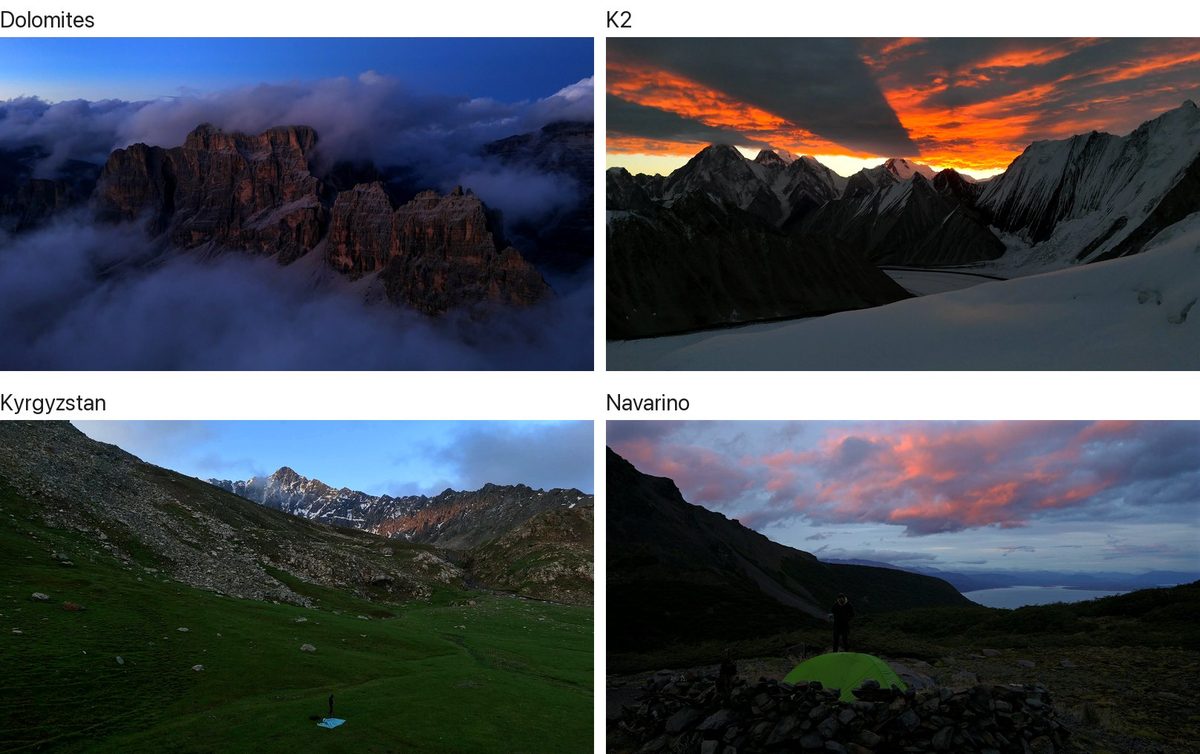
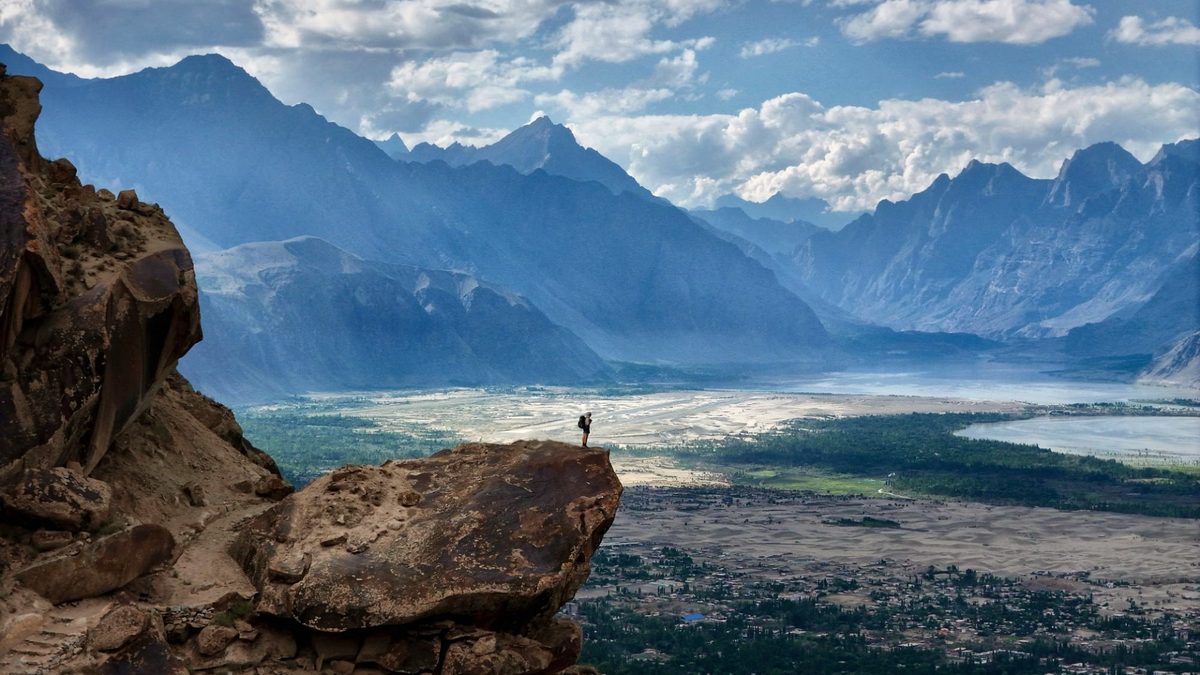
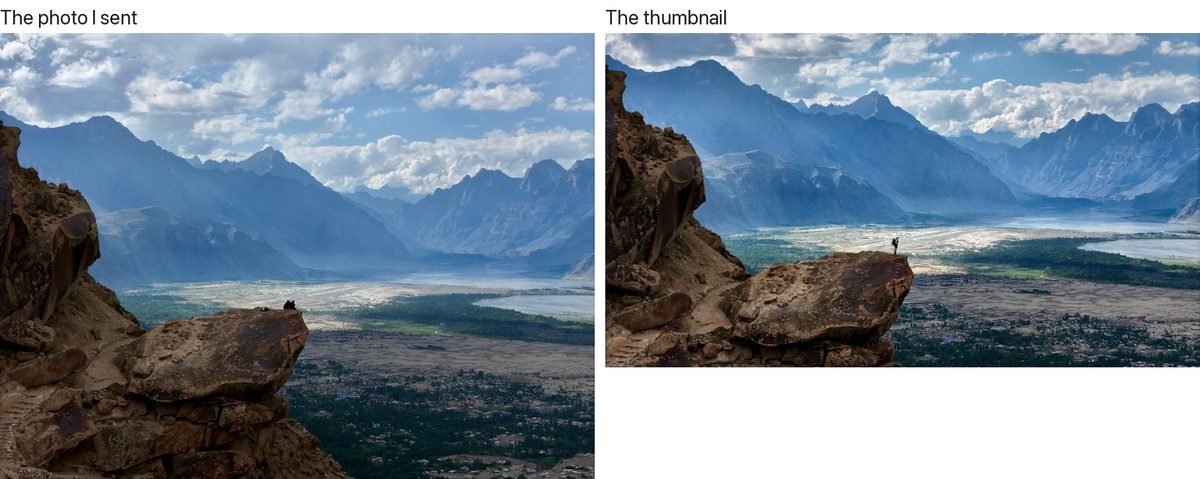
None of them beat a photo I already had, from a ledge above Skardu in Pakistan. Nano Banana Pro took two people out of it and added a small figure of me on the ledge, made from a photo of me in Lofoten and lit to match the light.
Claude had set up YouTube's thumbnail test with three different trips. I asked for "two variants of that photo for the A/B test" instead: one cropped tighter, one more vibrant. YouTube is now testing the three by watch time.
The launch
I didn't want launch posts that look like every other hiking clip. Both ideas were mine. AI built them.
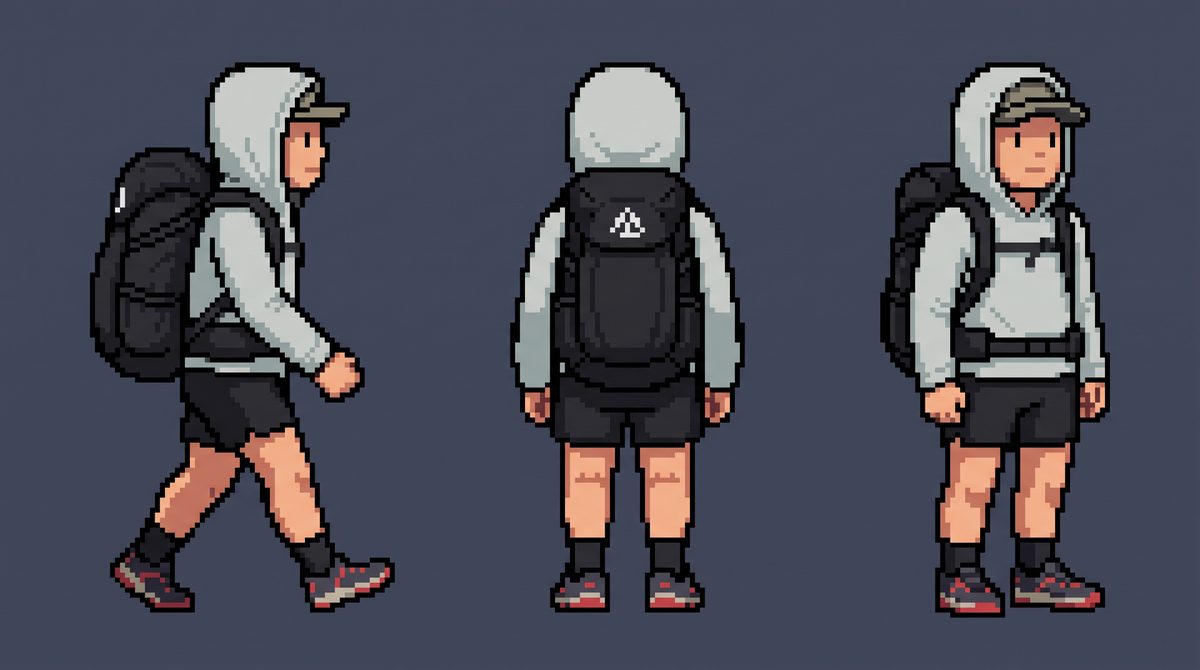
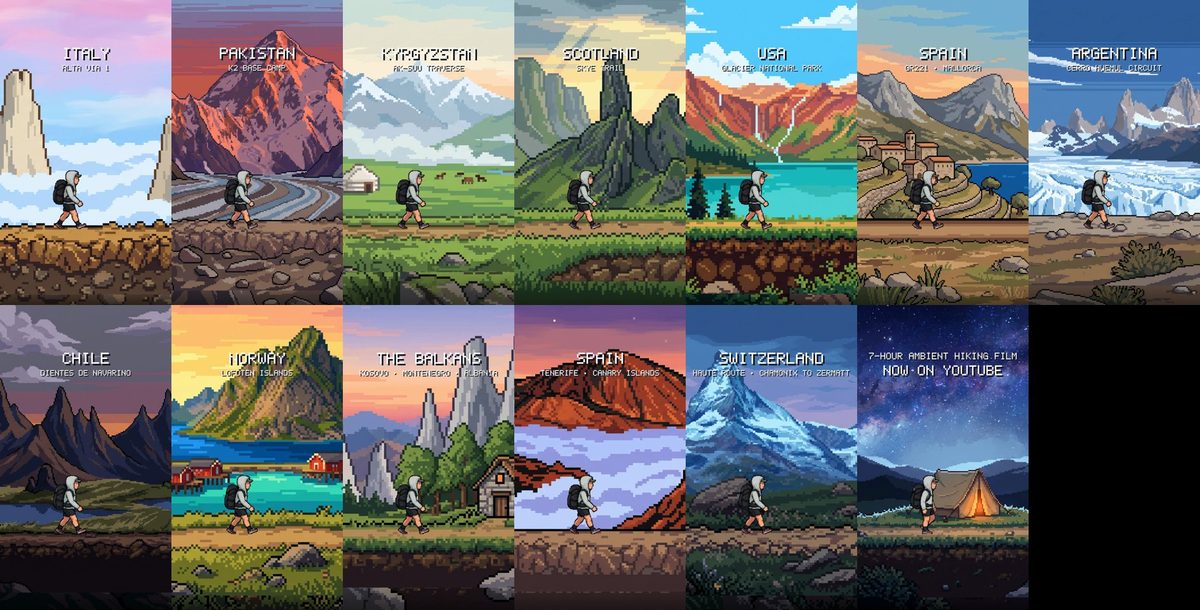
Pixel Kraig. Me as a pixel-art character, walking side-scroller style through all twelve trips, dawn to night, ending at a tent under the stars. That's where the day-to-night idea from the first plan ended up. Nano Banana Pro drew the character and the backgrounds. Claude cut a walk cycle from the sheets, wrote the scroller and drew its own pixel font, dot by dot. Its first K2 looked like Everest.
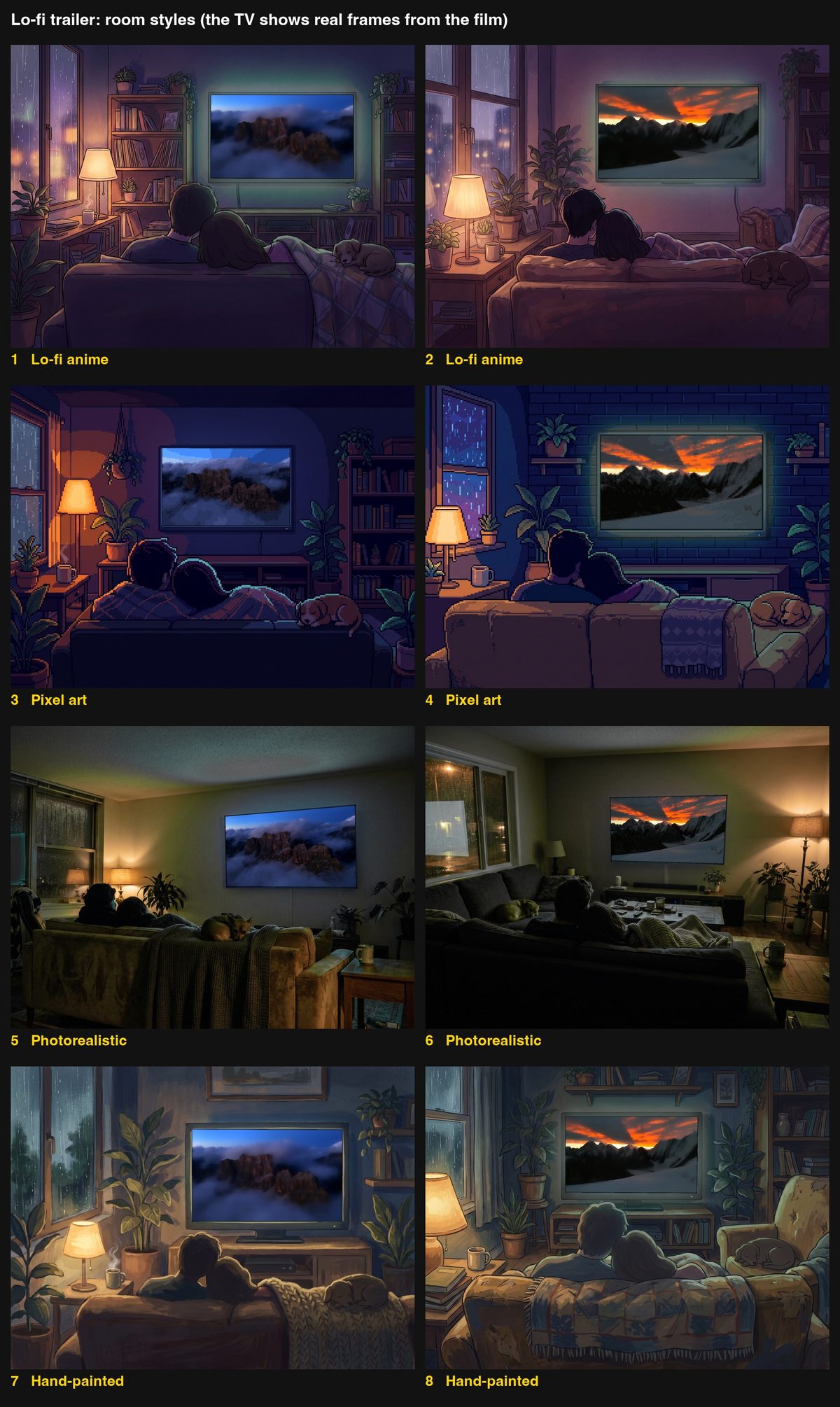
The lo-fi trailer. Two people and a dog asleep on a couch, rain on the window, my film on the TV. Claude made eight rooms in four styles. I picked the anime one, then asked for more: a better sequence from the film, "the tv has to match the style and color," a thirty-second loop, slight movement from the dog, rain outside.
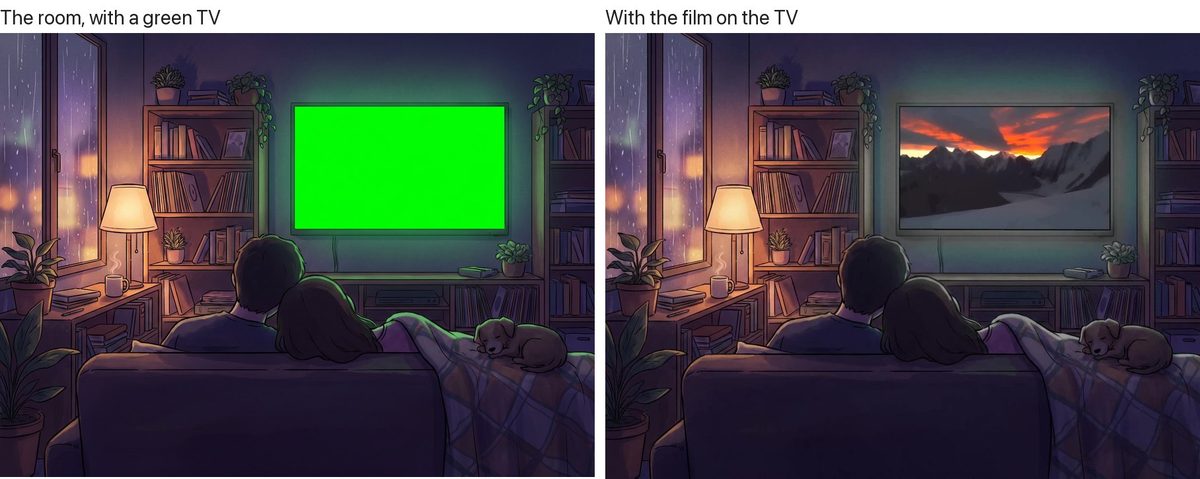
The rooms were drawn with a flat green TV. Claude put six real shots from the film on it, styled to the room, and relit the walls and the sleepers with each shot's colours. The dog breathes eight times and the couple six in thirty seconds, so it loops without a seam, on the beat of Drift Asleep by Flint, licensed from Artlist.
Where it's posted
The film itself is only on YouTube, in 4K. I wanted everything else out at the same time as the film, so on October 27:
- 11 AM, Pixel Kraig: a reel on Instagram, shared from there to Facebook and Threads so the views count together, plus TikTok, a YouTube Short and a wide version on X.
- 4 PM, the lo-fi trailer: the same places, vertical everywhere and 4:3 on X.
Over the next two weeks more goes out in short pieces, one trip at a time.
What I learned
AI's first version is a draft. No music, a montage, Artlist over my own mixes, two songs at once, boots on a mountain, K2 first, a K2 that looked like Everest. Each of those got caught by watching and listening, and the film got better every time I said what was wrong.
It's very good at the long, careful middle. Logging every shot, measuring every second of sound, writing thousands of volume keyframes, licensing songs and filing claim forms. That's the part that used to stop me finishing projects this big.
A music licence belongs to a video, not to the footage. Reuse a film and you license its songs again.
Let the length follow what you have. I planned three hours. Twelve whole trips made seven and a half.
There are no AI pictures and no AI music in the film. The promos and the thumbnail edits are AI, on purpose. The film isn't, and I'm the one who made it public.
7 Hours of Ambient Hiking Footage , made for a TV and a quiet evening.
*Claude drafted this article from my notes on the project, and I read and approved it.*