Making my Türkiye Black Sea film: from AI cuts to my own final edit
The behind the scenes of my sponsored film from Türkiye's Black Sea coast: a 100-minute rough cut, an editor's first cut, Claude's cuts built around my voice, and the two passes in Final Cut where I took it back and made it mine.
Watch it: A Week on Türkiye's Black Sea Coast with a 360 Drone
The trip and the job
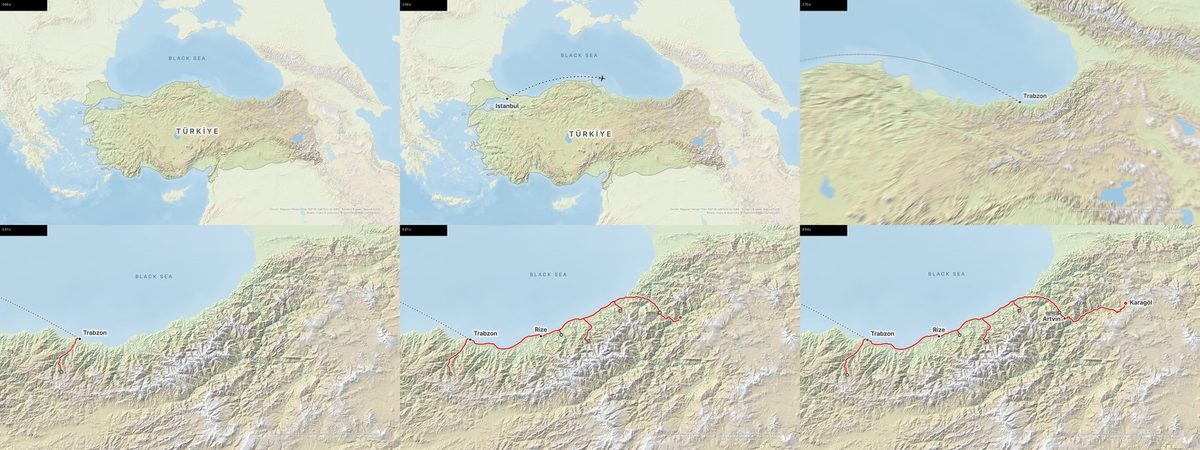
In August I spent a week on Türkiye's Black Sea coast with a small group of other creators. We started in Istanbul, flew east to Trabzon, and worked our way along the coast and up into the mountains: Sümela Monastery in its cliff, the tea gardens above Rize, the wooden houses of Pokut Plateau, a reservoir near Artvin, and Karagöl, a lake shaped like a heart.
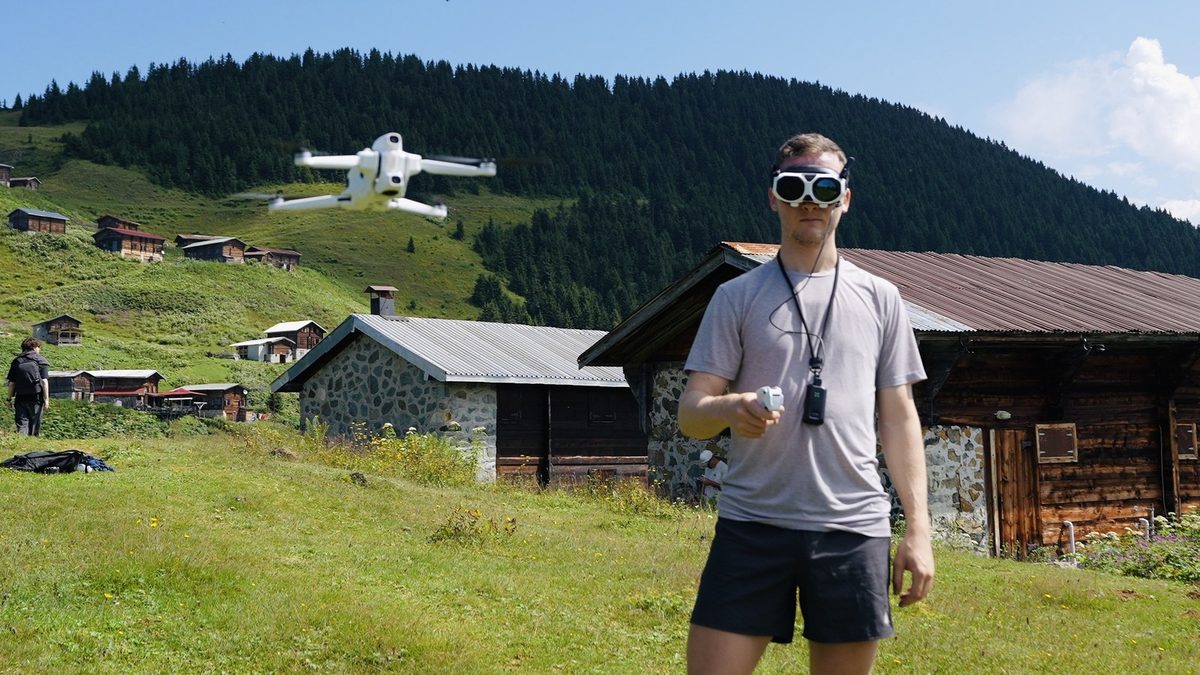
I also brought a new kind of drone. It films in every direction at once, even back at me, and you fly it with goggles on your face and a small pointer in your hand. Its maker sponsored the film.
I came home with 343 files, 238 GB, all of it backed up in its own trip folder in Google Drive. By September 4 I had every clip on a Final Cut timeline in the order it happened: 1 hour 40 minutes, 265 clips, no narration, no music. A third of it was the goggles' own recordings.
That's an inventory, not a film. And I was stuck on what this one should be. I said it plainly to Claude on September 24: "I've never really done a dedicated ad and I don't quite know what that looks like, like how involved." Then: "I just need to ship the product and I need to like stop overthinking."
Version one: an editor, and the wrong brief
So I hired an editor. Claude built him a handoff folder: my rough cut as a Final Cut file and as a Premiere file, the 216 clips it uses, a script, and a stand-in voice-over made with an AI copy of my voice. The brief asked for 40 to 45 minutes.
His cut came back on October 4 at 33 minutes 46 seconds. He followed the brief closely, and he was honest that a lot of the footage repeated. Watching it, I could see the brief was the problem. A full trip edit wasn't the film. I sent notes that morning, and the next day I changed the whole job: "I want the main video to be a shorter, narrated story (about 15-18 minutes) rather than a full trip edit." His part became the finishing: color, the sound mix and the brand details.
Version two: Claude's first cut
Claude wrote a script and a paper edit, the plan of a cut written shot by shot, with each clip and the second it starts and ends. It took the shape from one of my films that worked, Hiking Alone in Kyrgyzstan: a short hook, a few lines of narration at each new place, my own on-camera lines doing most of the talking, and music only at a few moments.
On October 5 it rendered that with ffmpeg: 14 minutes 42 seconds, 169 shots, with the stand-in AI voice reading 34 lines. Then it reviewed its own cut and didn't like it much. The voice read at 209 words a minute, and I talk at 163, so it sounded rushed and not like me. The drone has no sound, so there were about 70 seconds of dead silence in 13 gaps. And the hook named a monastery that never appeared on screen.
The fix was my own voice, at my own pace.
Talking it through
The first try at recording didn't work. Claude made a card of interview questions, and I stalled on prompts that felt abstract. Ten minutes in, I said what I actually needed: "I just need thumbnails in a grid of just like all of the frames from that day."
So Claude built a storyboard: one section per day, a frame from every clip labelled with the place it was filmed, and a line or two to read word for word where something had to be exact. It found the facts itself, from my email and the clips' timestamps, instead of asking me.
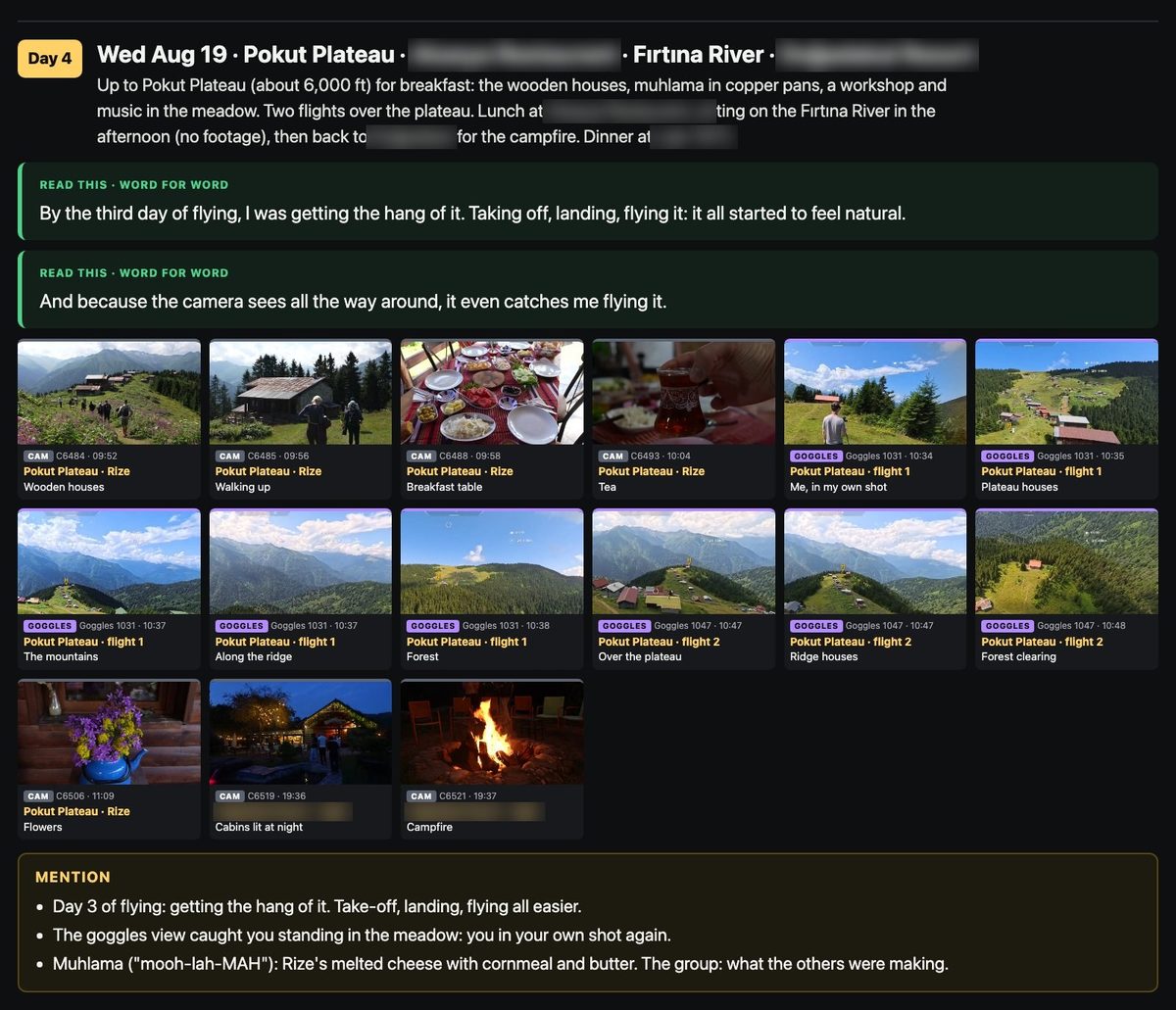
On October 7 I sat down and talked through the whole week in one take, 34 minutes, reacting to the pictures as I went.
Versions three and four: built around my voice
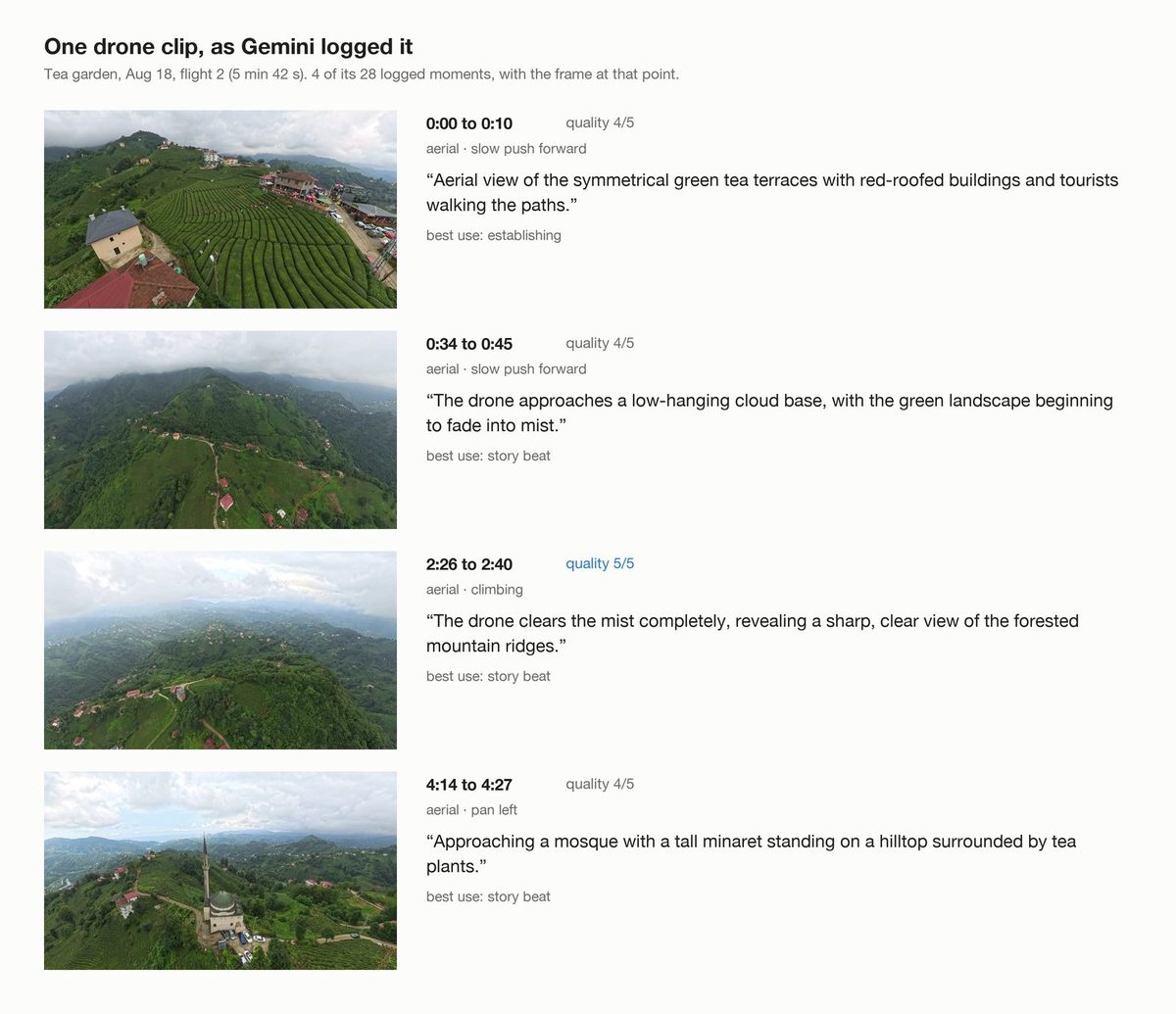
Whisper transcribed the take on my Mac with a time on every word. Claude read it, kept the lines that told the story, dropped the stumbles and repeats, and cut each kept line on its word times. Meanwhile Gemini watched all 298 clips and wrote a shot log: every moment with its time, what happens, the kind of shot and a quality score. Claude checked the best picks against the frames. Gemini isn't always right: one moment it called "the flag at sunset" was a top-down shot of a hotel pool.
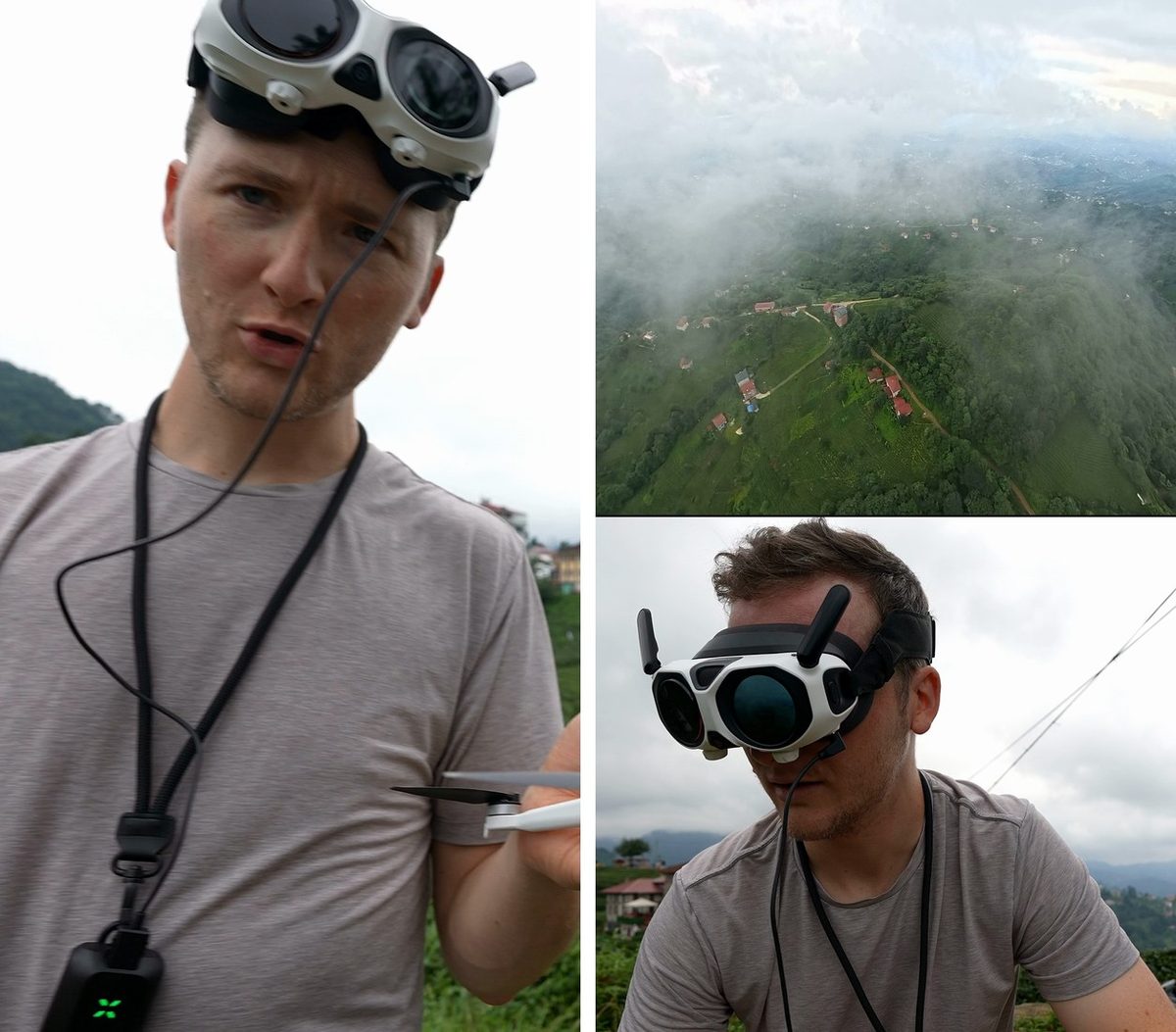
Two hours after I stopped talking there was a 16-and-a-half-minute cut. By the evening, version 2.1: 16 minutes 40 seconds, 247 shots, my narration under 73% of it, natural sound under every drone shot, the animated map in the hook, and split screens of me in the goggles next to what the drone filmed.
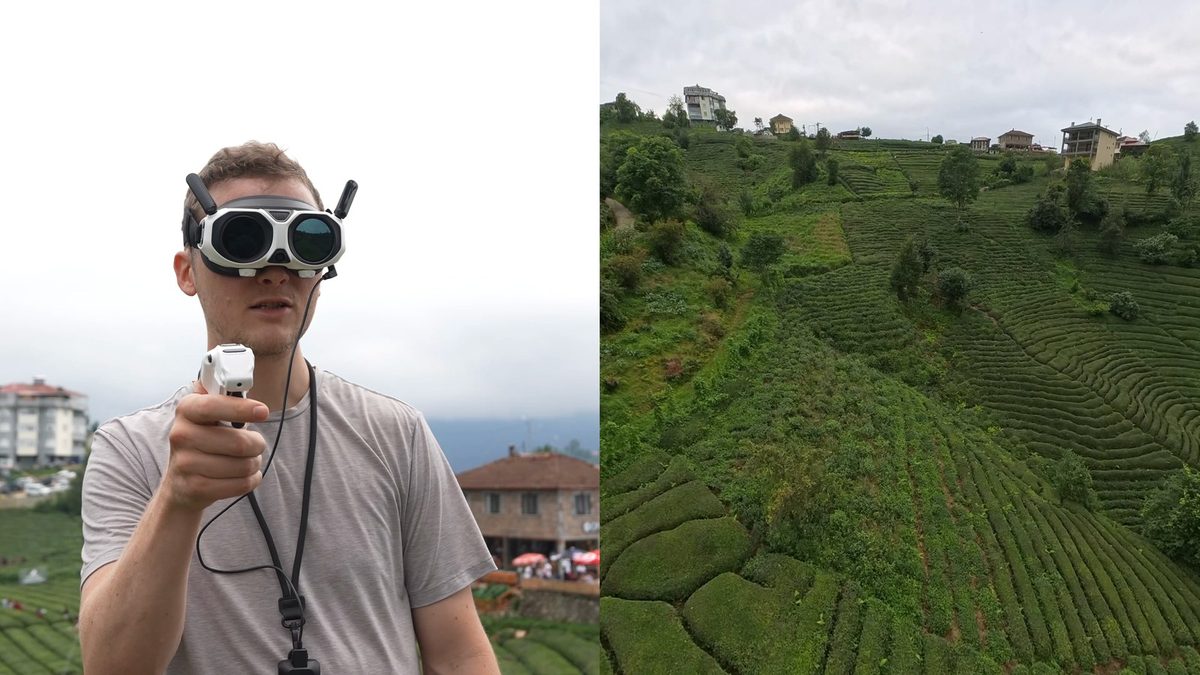
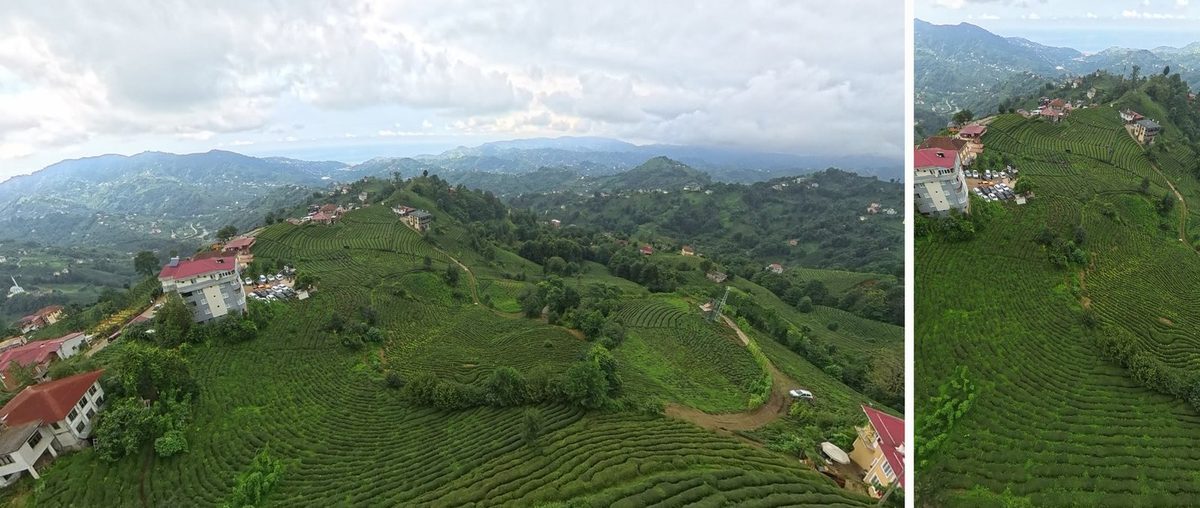
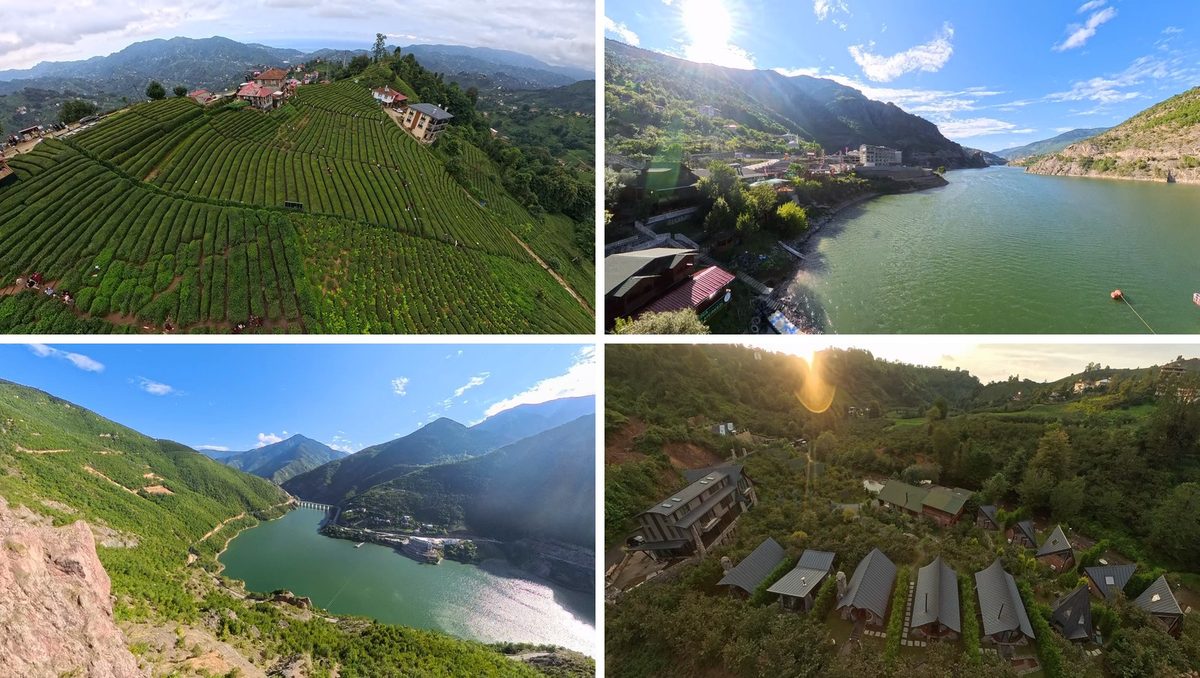
Because the drone records in every direction, you can fly first and choose where the camera points later. One flight over the tea hills became a wide shot for YouTube and a vertical one for a phone.
That same day I asked for something that has stuck: every cut Claude makes now also comes out as a Final Cut timeline, "because it's much easier for me to understand what's going on when I can see it in the timeline with all the layers, as well as make adjustments myself. And then you can learn from the things that I did."
My first pass in Final Cut
On the morning of October 8 I opened 2.1 in Final Cut. I didn't write notes. "It would just be way too much work to communicate the fixes. So I'm just making adjustments and fixes within Final Cut."
It was harder than it should have been. Claude's timeline was built for its own render script, with hundreds of small pieces of narration, not for a person. In my words: "It's just dirty. It's just like not organized for the edit."
In about an hour and a half I took out all of the music, every cue. It was temporary music, and it wasn't mine. I cut a few lines that slowed the start, like the airport and who sat at which table, and added one about being jet lagged. 16:40 became 16:11. Then I stopped and handed it to the editor with one rule above the rest: "Keep my story, order and narration. Don't change what's said. Make every shot earn its place."
The finish, and the checks
His finished cut came back on October 11 at 16 minutes 21 seconds: a light, natural grade, a clean mix, the brand cards, and the temporary music back in. He works in Premiere, so Claude turned his timeline back into a Final Cut one, 373 picture clips, 285 sound clips and 36 titles, matched to his export to the frame.
Then Claude checked it against my cut. Every story beat was there, in order. But two of my lines had been dropped, the sound clipped in three places, and the on-screen text was too small to read on a phone. Claude fixed all four in a new version, 2.3. I watched a few minutes of it and knew it still wasn't mine: "there are a bunch of edits that i'll want to fix manually."
My last pass
On October 12 I closed Claude and edited alone. By the next morning the film was 14 minutes 20 seconds. Here is every version, drawn from the Final Cut project files.
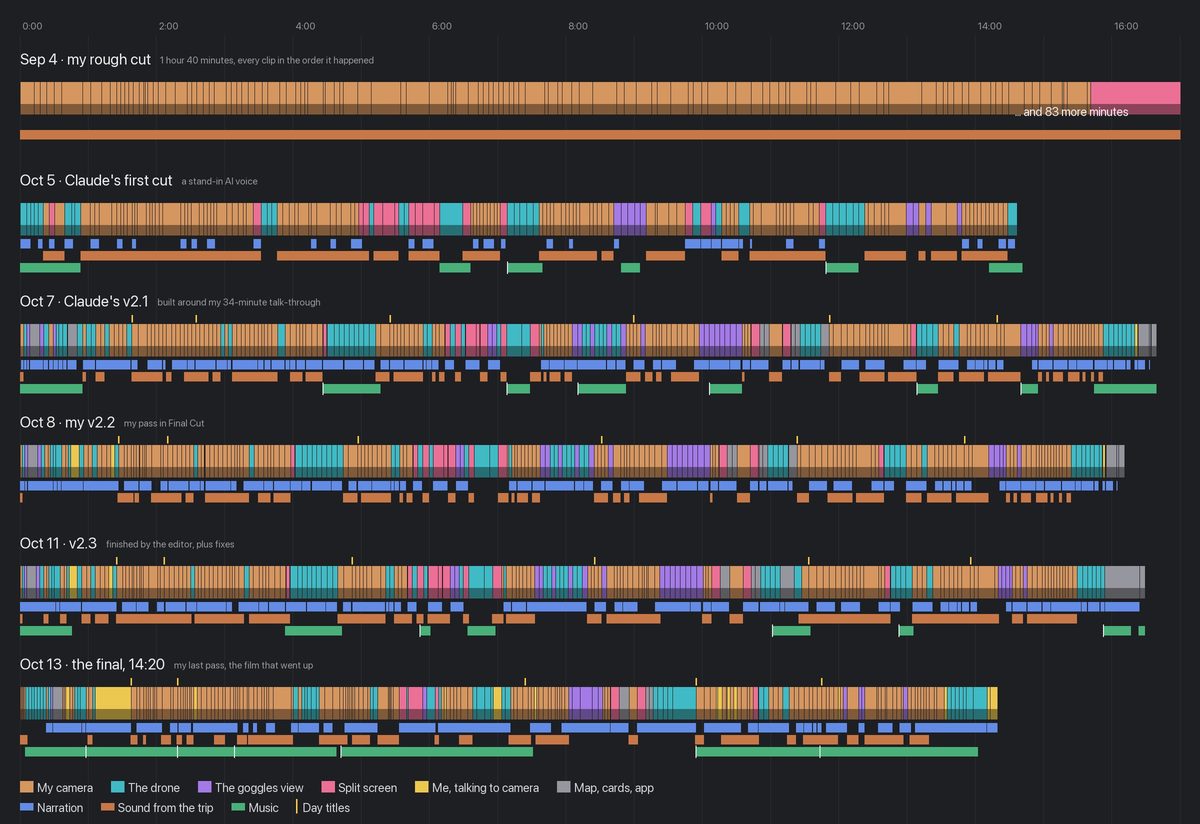
What changed in that last pass:
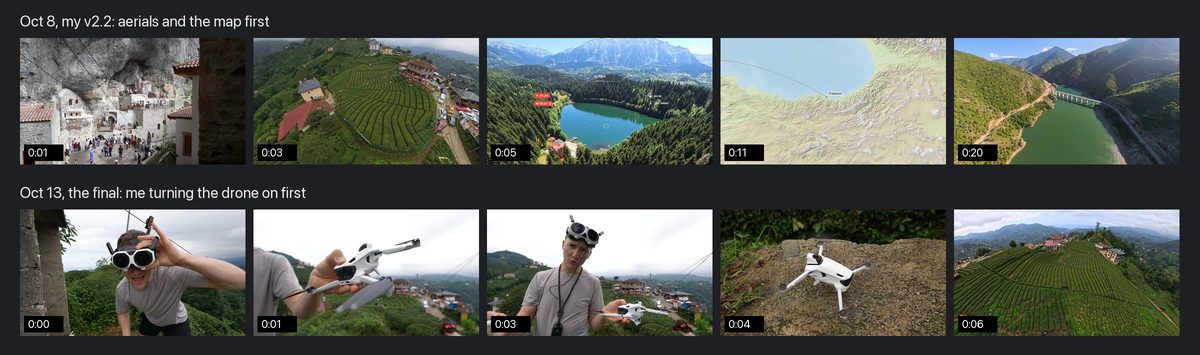
I start with me, not a map. Every earlier version opened on narration over aerials. Mine opens on me pulling the goggles on with a grin, turning the drone on and setting it on a rock, then the seven best drone shots, about two and a half seconds each. There's no narration for the first 23 seconds.
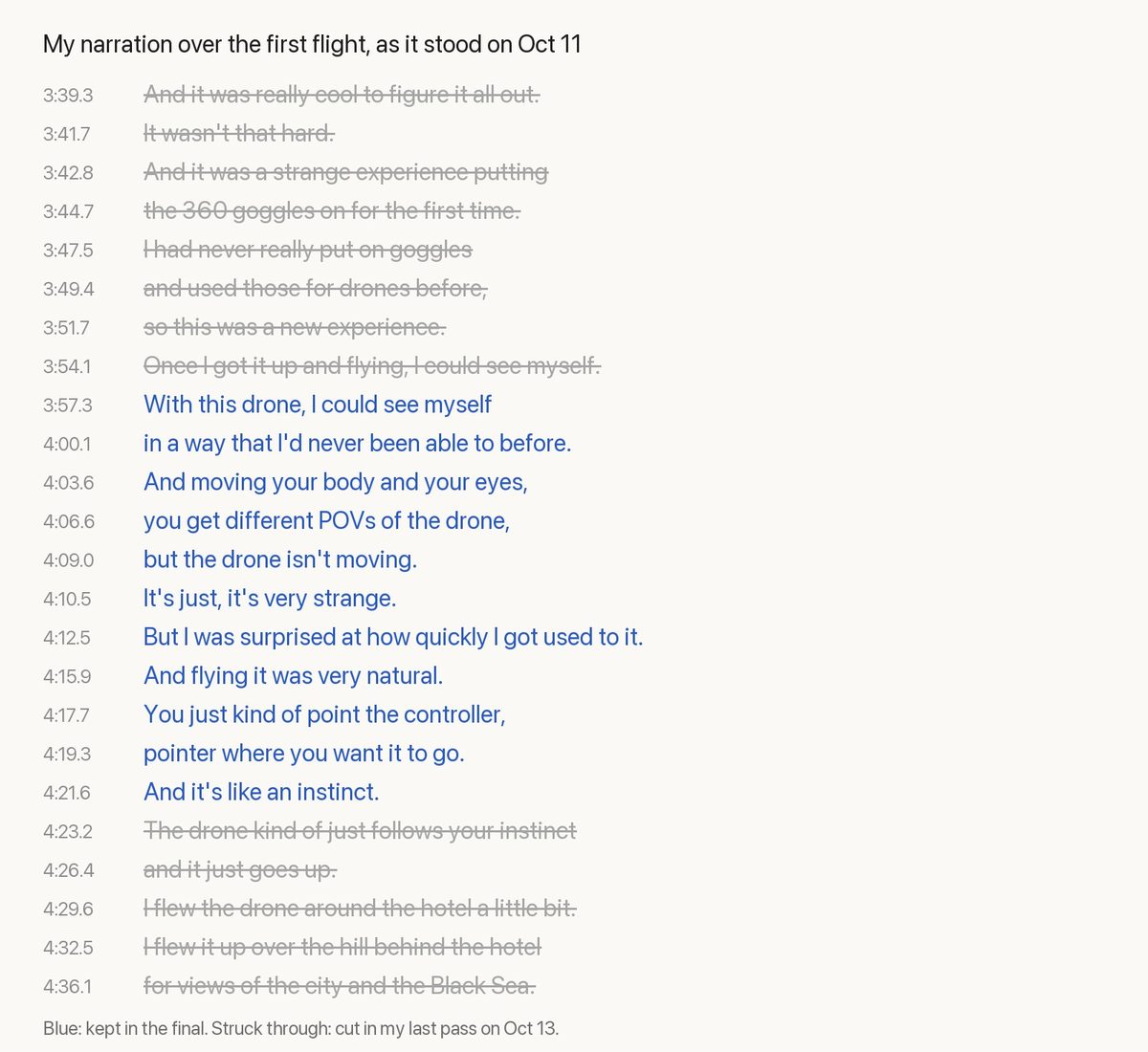
I cut the explaining. About 300 words of my narration went, 13% of it. Almost all of it was how-to: where I took off, that it "wasn't that hard", how the drone follows your instinct. What stayed is what it felt like.
Music all the way through. I licensed seven songs on Musicbed and laid them back to back, one after another, with the trip's own sound under them. Music went from a fifth of the film to four fifths. It stops only for a stretch on Pokut Plateau and the part about the drone itself.
Fewer words on screen. Feature names and most labels went. Titles dropped from 34 to 21. Split screens dropped from 17 to 7, kept only where the two halves really show different things.
A bit more of me. About a minute and a quarter of me talking to the camera, half of it telling how the trip came about.
The sponsor reviewed it that day and approved it, and it went up on October 14. One line in it isn't my real voice: the short sponsor message near the end is read by the AI copy of my voice.
The shorts and the reels
During and after the trip I made two vertical reels for the trip's hosts. For the second, I started from a 32-shot assembly with a temporary voice, then recorded my own voice and finished it in Final Cut. Together they have about 190,000 views on Facebook and Instagram.
The film also owed two shorts. Claude's first drafts on October 7 were a recap, a quarter of it cards and titles, and a side-by-side of a setup and its shot. On October 13 I changed both. Short 1 became my new opening: "i also like the opening sequence of my video with me turning on the drone. that paired with the best footage would work well for a short." I cut my own 23-second version to show what I meant. Short 2 became a split screen of me in the goggles over the drone's own shot of the same flight, because "the drone footage has to be the good footage and not what the googles see low res version." Claude rebuilt both to those rules.
How it did
In its first week the film had about 27,000 views on YouTube. The two shorts have 70,000 and 54,000 views across Instagram, Facebook, YouTube Shorts and TikTok. On Facebook and Instagram they did about as well as my usual short. On TikTok they barely moved.
What I learned
The first version is a draft, at every step. The editor's 34-minute cut, Claude's first cut in a borrowed voice, Claude's 16-minute cut, my own first pass, and the finished version were all steps toward a film none of them was yet. Each one got better because someone watched it and said what was wrong.
Taste happens in the timeline. Notes worked for facts: a dropped line, a clipped sound, text too small to read. The changes that made it my film, the opening, the cuts to my own words, the music, I could only make with my hands in Final Cut.
Show, then say. The opening that works is me and the drone and the best shots, before any narration.
Cut the explaining, keep the experience. People don't need to know how I set it up. They want to know what it was like.
AI is very good at the long, careful middle. Transcribing a 34-minute take to the word, logging 298 clips, turning a Premiere timeline into a Final Cut one, checking every version for a dropped line or a clipped peak. That's the part that would have stopped me finishing.
Claude now has my edit as a file to learn from: what I cut, what I kept, and what I added. The next cut it makes should start closer to mine.
A Week on Türkiye's Black Sea Coast with a 360 Drone
*Claude drafted this article from my notes on the project, and I read and approved it.*